
Page Focused Model
Modern readers are overwhelmed and under‑focused. The average person now switches tasks or screens every 47 seconds, down from 2.5 minutes in the early 2000s, according to Dr. Gloria Mark of UC Irvine, who has tracked digital attention for two decades. This constant interruption erodes the brain’s ability to encode information into memory; when attention is disrupted, learning and retention drop sharply, as confirmed by cognitive research summarized by the Center for Brain, Mind and Society brainmindsociety.org.
At the same time, digital media has shifted toward ultra‑short, dopamine‑driven content. Nearly half of users now find videos longer than a minute “stressful,” and platforms increasingly optimize for rapid, fragmented consumption rather than comprehension, as reported by The Independent . This environment encourages skimming, swiping, and novelty‑seeking behaviors that weaken sustained attention and long‑form understanding.
The consequences are visible globally. Sweden, after years of pushing tablets in schools, reversed course when national assessments showed declines in reading comprehension and vocabulary. Their education ministry concluded that scrolling‑dominant digital reading environments were harming retention and focus, prompting a return to page‑based learning.
This is the core problem: today’s digital reading model is built for speed, not understanding. Scrolling fragments attention. Notifications interrupt thought. Visual overload overwhelms working memory. And as attention spans shrink, so does the ability to absorb complex ideas.
Readers need a format that restores focus, supports deep learning, and still delivers the engagement of modern media.
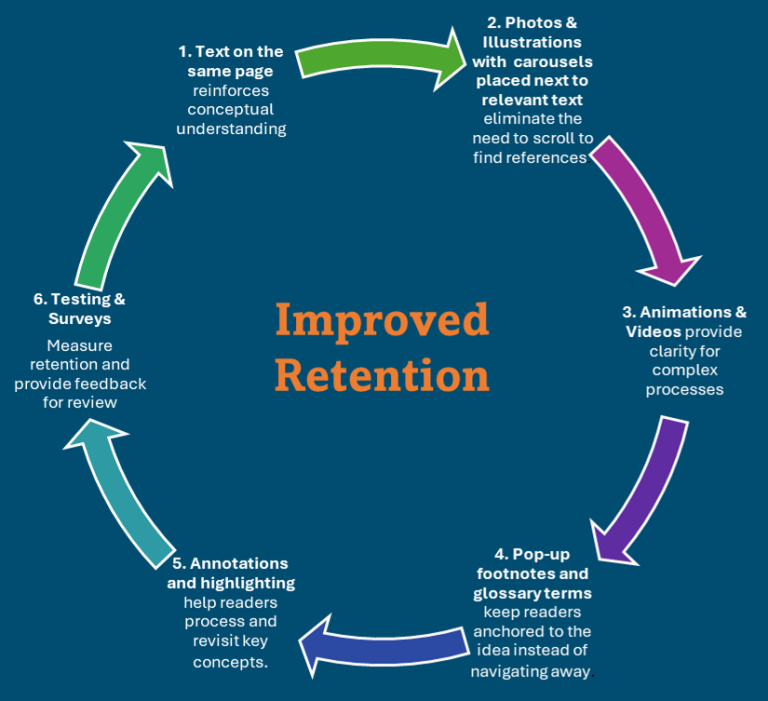
Activdox combines dynamic animation with page‑based textual reinforcement, creating an environment that aligns with how the brain actually processes information.
This hybrid model mirrors what educational researchers recommend: use animation to explain, use text to reinforce, and keep the learner inside a stable conceptual frame.
These processes used together reduce cognitive load that takes away focus.
Activdox's digital
page-focused
reading model